





Top 10 Screen-Free Activities for Kids to Stay Engaged at Home
ABWA Team
- 20 February 2026
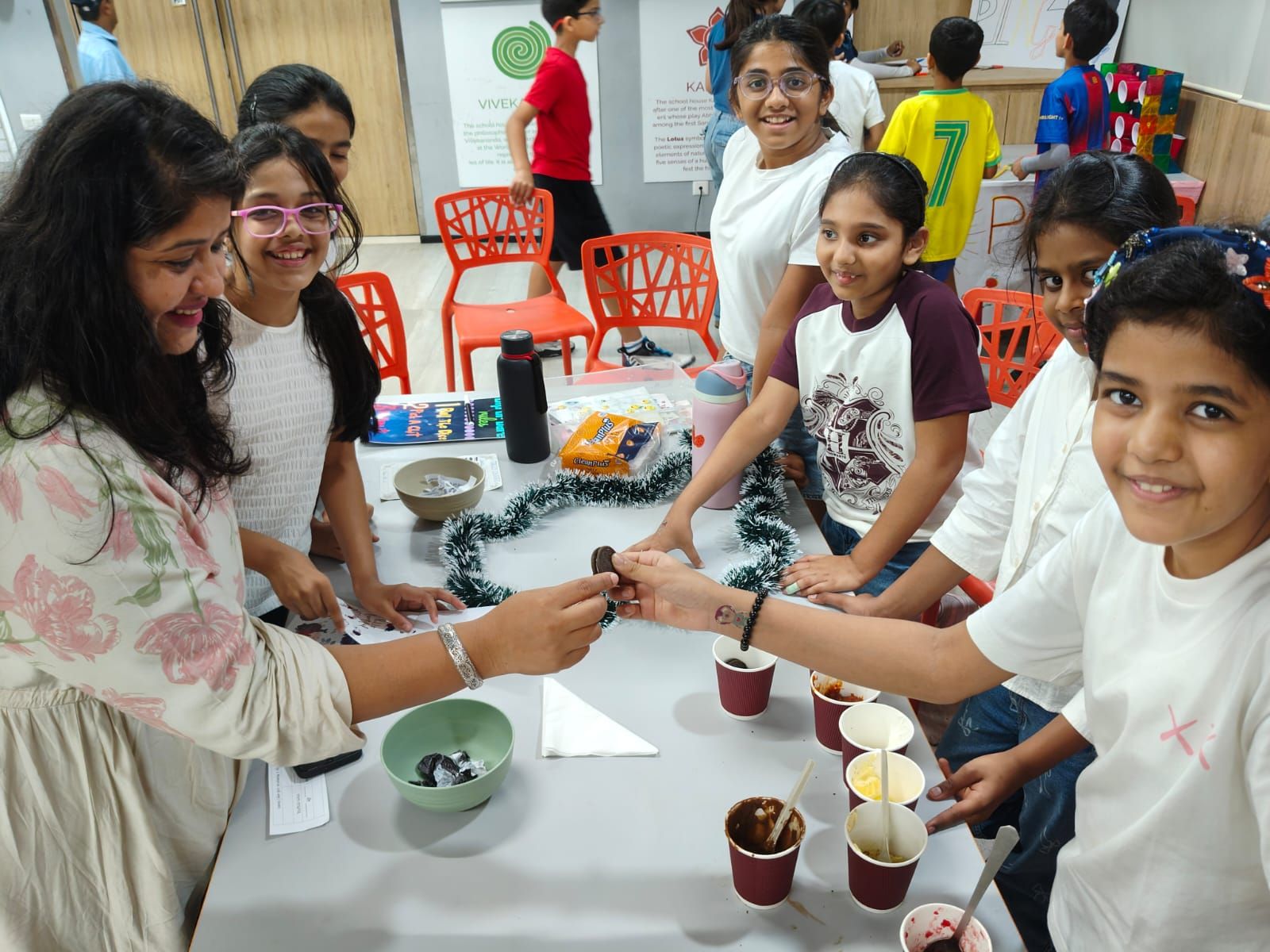
Looking for screen-free activities for kids that actually keep them engaged at home? You’re not alone. With rising screen time, many parents struggle to find meaningful alternatives. The good news is - you don’t need gadgets to keep children busy. With the right mix of structure, creativity, and simple activities, you can help your child stay engaged while building independence, focus, and emotional resilience.
Here are practical screen-free activities and ideas to help parents create engaging, no-screen environments at home.
1. Why is it important to prioritise non-technology activities during free time?
Non-technology activities mobilise various developmental systems at the same time, like cognitive, emotional, social, and physical. In case of heavy use of screens by children, particularly passive consumption, the following tendencies tend to develop:
- Reduced attention span
- Lower frustration tolerance
- Increased dependency on external stimulation
- Decreased independent play skills
In contrast, having a hands-on engagement can have the following benefits:
- Strengthen executive functioning, such as planning, impulse control, and memory
- Encourage intrinsic motivation
- Foster creativity and resilience
Boredom should not be your enemy; you should look at it as a catalyst for imagination. Children start to come up with their own ideas and stories, as well as solutions, when they are involved in screen free activities.
2. How can parents balance work responsibilities with keeping children engaged?
The first step is abandoning the expectation of constant parental involvement. Children do not need to be supervised every second. What they need is structure.
Divide the day into three functional segments:
- Independent engagement
- Family time
- Physical movement
Instead of a rigid schedule, try to build a predictable routine. For example:
- Morning: Independent creative or constructive play
- Midday: Participation in household tasks
- Afternoon: Physical movement or traditional games
- Evening: Family reading or role play
Negotiation and emotions are more likely to be reduced by predictability. Children are prepared for what to expect, and this makes it easier to move through the process.
3. How do you cultivate independent play without feeling guilty?
Independent play is a learned skill; it does not develop automatically. What you can do is you can start small. Give it 10 to 15 minutes. Get the materials prepared, explain the task briefly, and after that, take a step back. Avoid hovering over them or trying to correct them unnecessarily.
What are the best screen-free activities for kids?
Best screen-free activities for kids include:
Building blocks -
Blocks encourage open-ended thinking. A child can build, demolish, redesign, and experiment endlessly. This process strengthens spatial awareness, patience, and persistence.
Puzzles -
Start with simple puzzles for your child and gradually increase the complexity after that. Puzzles enhance concentration and logical reasoning. The sense of accomplishment at the completion of any puzzle will build confidence in them.
Drawing and art -
Instead of scolding your child for wall scribbling, designate a creative space for them. You can use chart paper, chalkboards, or even a specific drawing station. This helps them to express themselves through a better channel. Independent play will teach your child self-reliance. The long-term payoff of this is going to be significant as children who can engage themselves develop a stronger emotional control and flexibility.
Role play -
Role play encourages imagination and emotional development by allowing children to act out real-life scenarios like a classroom, hospital, or shop. It builds communication skills, empathy, and creativity while helping kids understand different roles and situations in a fun, engaging, screen-free way.
Reading -
Reading is a powerful screen-free activity that enhances vocabulary, focus, and imagination. Whether through storytelling or independent reading, it helps children develop language skills, improves concentration, and strengthens parent-child bonding, making it a meaningful and calming daily habit.
Scavenger hunts -
Scavenger hunts combine movement, curiosity, and problem-solving in an exciting screen-free activity. By searching for hidden objects using clues, children improve observation skills, memory, and logical thinking while staying physically active and mentally engaged at home.
Indoor physical games -
Indoor physical games like obstacle courses, dance, or balloon volleyball keep children active without screens. These activities improve coordination, balance, and mood while reducing restlessness. They are essential for physical health, energy release, and maintaining focus throughout the day.
You can also explore how different types of classroom questions improve children’s thinking and engagement.
4. Can household chores genuinely keep children engaged?
Yes. In fact, real work is often more engaging than playing with toys. Children enjoy participating in adult activities because it makes them feel capable and included. Hence, household chores can definitely be one of the activities for kids at home without screens.
Some age-appropriate chores include:
- Sorting laundry by color
- Filling water bottles
- Arranging shoes
- Watering plants
- Wiping safe surfaces
- Kneading dough
- Folding small towels
The goal is not to be perfect in every single task, but the main part is being involved.
Chores help to build responsibility and normalise shared household duties. They also teach cooperation. Importantly, involving boys and girls equally in chores fosters long-term gender-neutral responsibility.
5. How does role play contribute to development?
Role play stimulates imagination, language growth, empathy, and emotional intelligence. Again one of the very creative activities for kids at home without screens.
Children can enact:
- A pretend hospital
- A restaurant
- A classroom
- A grocery store
- A royal court
- A home library
Role play is also a proper stress-release process. There are only a few requirements in terms of props, as creativity is the force behind the experience. This helps children test their authority and narration.
6. What traditional games work well at home?
Traditional games are screen-free, low-cost, physically engaging, and social in nature. Some of such games include:
- Hide and Seek
- Hopscotch
- Lemon and Spoon Race
- One-Leg Balance Challenges
- Rock-Paper-Scissors
- Simon Says
These games enhance coordination skills, teach the children the importance of following rules, and develop sportsmanship. You must also allow children to experience losing. This will allow them to develop emotional resilience as resilience grows by being able to constructively handle small disappointments in a positive manner.
7. How do books support engagement without screens?
Reading remains one of the most powerful screen free tools of engagement for kids. The benefits of reading include:
- Vocabulary expansion
- Listening skill development
- Strengthened imagination
- Deeper parent and child bonding
Repetition is good, particularly amongst young children. One can use the stories based on characters like Krishna or Arjuna to present the cultural narratives in a simple and entertaining way. Maintaining a reading habit of 20 to 30 minutes daily can be used to form lifelong literacy habits.
8. How can scavenger hunts stimulate curiosity?
Scavenger hunts involve movement, reasoning, and anticipation without screen time.
You can begin simply by hiding vegetables or fruits, small toys, or other tiny household objects. After that, you can gradually increase the complexity of the game by using clues such as:
- “Find something round and yellow.”
- “Look where shoes rest.”
Scavenger hunts give your child the following benefits:
- Strengthen deductive reasoning
- Encourage observation skills
- Improve memory recall
- Make learning interactive
They can also be adapted for vocabulary building or number recognition.
9. How important is daily structure for preschoolers?
Daily structure is foundational for emotional stability in young children. Anchor points in the day should include:
- Wake-up routine
- Meal times
- Quiet activity period
- Physical play
- Reading time
- Bedtime ritual
Consistency builds psychological safety. Children feel calmer when they understand the sequence of their day.
10. What indoor physical activities can replace outdoor play?
Movement is essential for emotional regulation and sleep quality. They are also very good option as indoor games for kids without screen.
Here are the few effective indoor options:
- Cushion obstacle courses
- Balloon volleyball
- Animal walks (bear crawl, frog jump, crab walk)
- Dance sessions
- Basic yoga sequences
- Balance challenges
- Reduces restlessness
- Improves mood
- Enhances coordination
- Supports better sleep patterns
Short sessions of about 10 to 20 minutes, multiple times a day, are more effective than one long session.
Are you worried about your child for distractions while studying? Read the 9 tips to overcome distractions while studying.
Final Thoughts
Keeping children active at home without screens is not a matter of perfection. It is concerned with planned structure and intentional sustainable routines. You do not need elaborate setups. You do not need constant novelty. Nor do you need to eliminate screens entirely. All you need is structure, clarity, and consistency. Children require connection, autonomy, and meaningful engagement, not constant stimulation.
Discover holistic learning at Aditya Birla World Academy, the best international school in Mumbai, which designs spaces that allow children to explore, participate, imagine, and move around freely. At ABWA, we are not merely killing time. Instead, we are developing confident and emotionally resilient individuals.
Frequently Asked Questions (FAQs)
How do you keep your little ones engaged at home without screens?
Use a rotation-based strategy:
- Set up independent play stations.
- Establish predictable daily rhythms.
- Involve children in household responsibilities.
- Incorporate imaginative role play.
- Maintain a daily reading ritual.
- Encourage physical games and movement.
- Offer creative outlets such as art, clay, or crafts.
Avoid overwhelming children with too many options at once. Focused variety is more effective than constant novelty.
What is the 3-3-3 rule for kids?
The 3-3-3 framework typically refers to dividing the day into balanced segments. They are:
- 3 hours of structured engagement (learning or guided activity)
- 3 hours of independent/free play
- 3 hours of rest, meals, and bonding
This model emphasises balance and prevents over-scheduling.
What is the 7-7-7 rule for parenting?
The 7-7-7 concept for parenting outlines developmental phases outlined below:
- First 7 years: In this phase, you need to prioritise nurturing and emotional security
- Next 7 years: In this phase, you need to emphasise discipline and responsibility
- Next 7 years: In this phase, you need to shift towards mentoring and guidance
While not a strict scientific model, it underscores the evolving nature of parental roles as children mature.
What is the 9-minute rule in parenting?
The 9-minute rule suggests giving:
- 3 minutes of focused attention in the morning
- 3 minutes during transition (after school or work)
- 3 minutes before bedtime
These short, intentional moments of undivided attention significantly strengthen emotional bonds.
What are non-tech activities for kids?
Non-tech activities for kids include the following:
- Building blocks
- Drawing and painting
- Puzzles
- Gardening
- Cooking assistance
- Board games
- Storytelling
- Craft projects
- Traditional physical games
- Scavenger hunts
- Yoga
- Dance
- Clay modelling
- Sorting and organising tasks
Non-tech engagement does not mean eliminating technology permanently. It means ensuring that children develop the capacity to think, create, and entertain themselves independently.


